
Horse-riding business case highlights the risks of unsupervised volunteer tasks
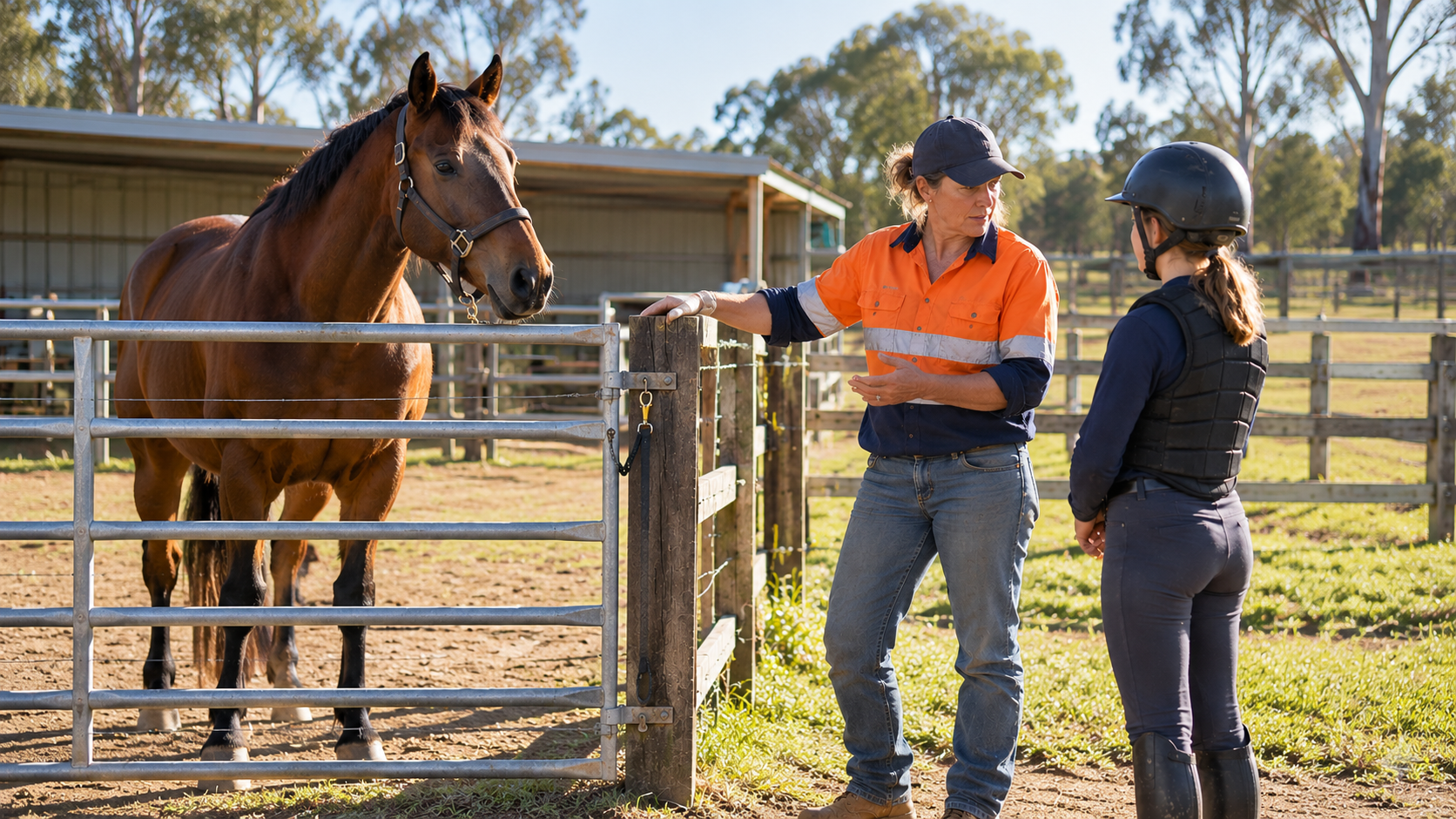
On 5 February 2025, a Queensland horse-riding business operator was sentenced after a young volunteer suffered serious injuries in a fall from a horse. The incident occurred on 26 August 2023. The case is a reminder for business managers that a task assigned to a volunteer still needs appropriate risk controls and supervision.
What happened
The business operated horse-riding activities and engaged young volunteers to assist. On the day of the incident, a 15-year-old volunteer was asked to retrieve a horse from a paddock. The volunteer attempted to ride the horse without a saddle or helmet while the operator was not supervising.
The horse became spooked and the volunteer was thrown to the ground, striking their head. The volunteer suffered a fractured skull, a serious brain injury and a head wound, was in a coma for five days and remained in hospital for a lengthy period.
What the court found
The Maroochydore Magistrates Court dealt with the matter on 5 February 2025. The business operator pleaded guilty to breaching section 32 of the Work Health and Safety Act 2011 (Qld), having failed to comply with a primary health and safety duty. The operator accepted that the risk of falling from a horse had not been eliminated or minimised so far as was reasonably practicable and that control measures should have been implemented.
The court made an adverse publicity order requiring the operator to send a notice to 10 similar businesses on the Sunshine Coast about the offence, the order and the importance of health and safety duties. The court also released the operator on a one-year undertaking under section 239, backed by a $5,000 recognisance and conditioned on not committing another offence against the Act. The $5,000 was the recognisance attached to the undertaking, not a fine.
The proceeding was adjourned for a further hearing on 12 February 2026 in relation to compliance with the order. The regulator’s summary subsequently records that the operator complied with the undertaking and that the court discharged the operator from it on that date.
In assessing the risks and reasonably practicable measures, the court had regard to the Horse riding schools, trail riding establishments and horse riding establishments Code of Practice 2002 and the Children and young workers Code of Practice 2006. It also considered the operator’s limited financial circumstances, general good character and efforts to address health and safety risks after the incident.
Why this matters to business managers
The work involved a volunteer rather than a conventional employee, but the task still needed to be assessed and managed. A business should not treat a task as low risk simply because it is brief, familiar or performed by someone volunteering.
Where a task involves a foreseeable risk of serious harm, managers need to consider what can be eliminated or controlled before the work begins. That includes deciding who is competent to do the task, what equipment and protective measures are required, and what level of supervision is appropriate—particularly when young people are involved.
The case also shows why written procedures need to translate into practice. Relevant codes of practice can help businesses identify hazards and select controls, but managers should check that controls are suitable for the actual task and are being followed.
What managers should take note of
- Assess the task before assigning it. Identify foreseeable hazards, including falls and the behaviour of animals, and consider whether the task can be avoided or done in a safer way.
- Set clear limits on who may do what. Make sure volunteers and workers understand which activities they are authorised and competent to perform.
- Plan supervision. Decide who will supervise, how closely, and what arrangements apply if the supervisor is temporarily unavailable.
- Specify required equipment and controls. Make expectations clear before work starts, including any required protective equipment and safe methods of completing the task.
- Give young people added consideration. Check that tasks, instruction and supervision are appropriate to their age, experience and capabilities.
- Use relevant codes as a practical benchmark. Review applicable codes of practice when identifying risks and selecting controls, and document the decisions made.
- Review after changes or incidents. Check whether procedures and controls remain effective when tasks, people or conditions change.
This article is general educational information, not legal advice. For a safety-focused discussion of the same matter, read Practical Safety Advisory’s article about the horse retrieval fall case. Every small business should check that it has the workers’ compensation (WorkCover) cover required for its workforce and maintains a suitable WHS system; insurance obligations can differ depending on the business and its workforce.
Source information
- Regulator: Workplace Health and Safety Queensland
- Source type: Regulator summary
- Decision date: 5 February 2025
- Further proceeding recorded: 12 February 2026
- Publication date: Not provided
- Source: Workplace Health and Safety Queensland court report
The available source is a regulator summary. No court judgment or sentencing remarks were attached to the source material.
Further support
This case is a reminder that every small business should check it has the workers' compensation (WorkCover) cover required for its workforce and maintains a suitable WHS system. Practical Safety Advisory can help businesses review practical safety arrangements. Read the related Practical Safety Advisory article about this matter.